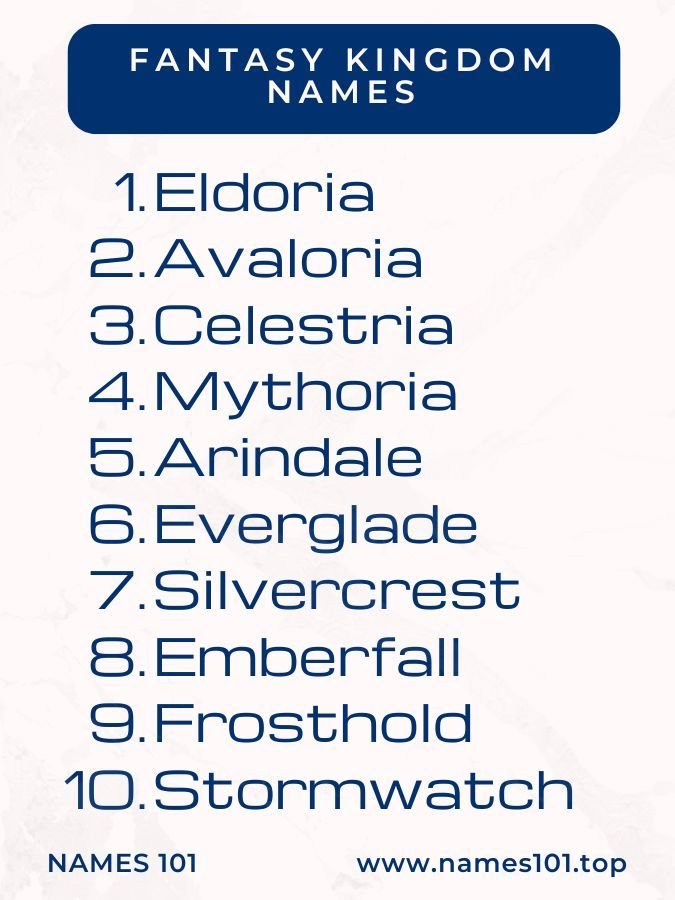
Imagine a world where the very names of your kingdoms whisper ancient secrets, echo epic battles, or hint at the mystical geography they encompass. A compelling kingdom name isn't just a label; it's a cornerstone for your entire fantasy setting, deeply integrating Kingdom Names into Fantasy Lore & Maps to enrich every narrative and visual detail. Getting it right can transform a generic landscape into a realm bursting with character, beckoning adventurers and readers alike.
This isn't about slapping cool-sounding words onto a map. It's about a strategic, artistic process that weaves together linguistics, history, geography, and culture to create names that feel authentic, memorable, and resonant. Whether you're a seasoned game master, an aspiring novelist, or a budding world-builder, understanding this symbiotic relationship between names, lore, and maps is crucial for crafting truly immersive experiences.
At a Glance: Crafting Unforgettable Kingdom Names
- Foundation First: Develop core lore (geography, culture, history) before naming. Names should emerge from your world, not be forced upon it.
- Embrace AI Tools: Leverage generators like Fluxai.art and Namegenhub.com to spark ideas, visualize geography, and refine your naming process.
- Meaning Matters: Great names often carry hidden meanings, reflecting a kingdom's traits, origin, or dominant features.
- Sound It Out: Pronounce names aloud to ensure they flow well and are easy for your audience to remember and say.
- Visual Integration: Place names thoughtfully on your maps, considering typography, scale, and how they interact with geographical features.
- Iterate & Refine: Naming is rarely a one-shot deal. Expect to tweak, regenerate, and refine names as your world evolves.
The Unseen Power of a Name: Why It Matters So Much
You know the feeling: you encounter a name like "Gondor," "Westeros," or "Valyria," and immediately a cascade of imagery, history, and emotion floods your mind. These aren't just arbitrary strings of letters; they are gateways to entire civilizations, pregnant with implied stories and distinct identities. In fantasy, a kingdom's name is its first impression, its rallying cry, its historical fingerprint.
Think about it:
- World Identity: A strong name gives your kingdom a unique identity, separating it from generic "The Northern Kingdom."
- Lore Anchors: Names can hint at a kingdom's past, its dominant culture, its founder, or a significant event, becoming instant lore anchors.
- Player/Reader Engagement: Memorable, evocative names draw your audience deeper into the world, making it feel more real and lived-in.
- Mapping Cohesion: When a name resonates with the visual geography on your map (e.g., "Silverwood Vale" for a forest kingdom), it creates a powerful sense of cohesion and believability.
- Narrative Driver: Sometimes, a name itself can inspire new plotlines or character backstories. What does "The Whispering Wastes" imply about its inhabitants or dangers?
Neglect naming, and your world risks feeling flat, indistinguishable, and ultimately, forgettable.
Laying the Groundwork: Lore Before Linguistics
Before you even think about generating a list of potential names, you need to understand what you're naming. A name isn't a vacuum-sealed label; it’s a reflection of the entity it represents. This means diving deep into your world's foundational elements.
Step 1: Envision Your Kingdom's Core Identity
Start with the basics. What defines this kingdom?
- Geography: Is it mountainous, coastal, forested, desert, or nestled in fertile plains? Are there prominent rivers, lakes, or unique geological features?
- Culture & People: What are the dominant races or ethnicities? What are their values, their social structures, their art, their religion? Are they warlike, scholarly, nomadic, agricultural?
- History: What's its past? Was it founded by a powerful sorcerer, a revered warrior, or a collective of refugees? Has it endured great wars, periods of peace, or devastating natural disasters? Are there ancient ruins or lost civilizations within its borders?
- Magic & Mysticism: Is magic prevalent? Are there specific magical phenomena or powerful creatures tied to the land?
- Dominant Traits: Is it known for its formidable army, its vast libraries, its intricate trade routes, or its dark secrets?
This deep dive into your kingdom's character will provide the rich soil from which truly meaningful names can grow.
Step 2: Sketching Your World's Canvas with AI
Even abstract ideas can start to take shape visually before names are finalized. This is where tools like Fluxai.art’s AI Fantasy Map Generator become invaluable. You can provide a detailed prompt describing your imagined world – perhaps "a medieval realm with jagged mountains, flowing rivers, a sprawling central forest, and an isolated coastal region" – and let the AI draw your initial map.
This visual feedback loop is critical. Seeing the proposed geography, even in a rough state, can spark ideas for names. A winding river might suggest a name related to a serpent or a journey, while a jagged mountain range could inspire names hinting at strength, danger, or ancient gods. You can iterate, refine, and download high-resolution maps, using them as a living document to guide your naming process. The visual elements provided by Fluxai.art can literally put the "map" in "Integrate Kingdom Names into Fantasy Lore & Maps."
Crafting Names That Resonate: Principles of Evocative Naming
With your kingdom's identity and basic geography in mind, you're ready to start building names. This is where the artistry truly begins.
Principle 1: Sound and Etymology
The way a name sounds is paramount.
- Phonetics: Does it roll off the tongue? Is it easy to pronounce? Avoid overly complex consonant clusters or awkward vowel combinations unless intentional for a specific cultural feel.
- Auditory Association: Hard consonants (K, T, D, G) can evoke strength, harshness, or ancient origins (e.g., "Karthos," "Drakenfell"). Softer sounds (L, M, S, V) might suggest beauty, serenity, or elegance (e.g., "Silverlark," "Valoria").
- Cultural Flair: Borrow phonological elements from real-world languages to give your names a distinct cultural flavor. A kingdom influenced by Norse mythology might have names with 'sk' or 'th' sounds; one inspired by ancient Rome might use Latinate suffixes.
- Etymology (Your World's Version): Great names often feel like they have a history, even if you just invent it. Break down potential names into root words and suffixes. Does "Aethelgard" sound like "noble protector"? Does "Rivenglen" suggest a valley by a river?
Principle 2: Meaning and Symbolism
The most powerful names are more than just sounds; they carry meaning.
- Direct Translation: Sometimes a direct translation works beautifully. "Ironhold" for a fortress kingdom, "Sunstone Peaks" for a mountain range known for its golden ore.
- Allegory/Metaphor: A name might refer to a kingdom's defining characteristic metaphorically. "The Silent Spires" for a secluded, scholarly realm, or "The Emerald Dominion" for a lush, magically vibrant land.
- Historical Reference: Name a kingdom after its legendary founder (e.g., "Arthanius") or a pivotal event ("The Reunited Lands").
- Geographical Description: As mentioned, names that reflect prominent geographical features are incredibly effective. "Veridia Forest," "The Crystal Sea," or "Shadowfen."
- Cultural Values: A name can reflect the dominant values of its people. A culture valuing knowledge might have a name like "Lumina," while a warrior culture might be "Grimfang."
Principle 3: Consistency (with Variation)
Maintain a degree of consistency within your world's naming conventions, but allow for logical variations.
- Regional Styles: Different regions or cultures within your world should ideally have distinct naming styles. The elven realms will likely sound different from the dwarven mountain holds or the human city-states. This adds realism and helps differentiate areas on your map.
- Avoid Overlap: Ensure your kingdom names are distinct enough from each other to prevent confusion.
- Intentional Inconsistencies: If two kingdoms have similar-sounding names, make it intentional! Perhaps they share an ancient linguistic root, or one is named in defiance of the other. This can generate compelling lore.
Principle 4: Leveraging AI for Inspiration and Generation
This entire process can feel overwhelming, but modern tools are here to help. The Namegenhub.com Fantasy Map Name Generator is an excellent starting point when you're brainstorming.
How to use it effectively:
- Input Keywords: Don't just type "kingdom." Be descriptive! Based on your kingdom's core identity, use keywords that describe its terrain, culture, or mood. For example, if you're naming a mountainous, dwarven kingdom known for its mining and ancient lore, you might input "dwarf, mountain, mining, ancient, forge, stone, deep, grim."
- Mix Scales: The generator can provide names for continents, kingdoms, cities, and even villages. Keep your scope in mind, but also experiment.
- Iterate: Generate several lists. If the first batch isn't quite right, tweak your keywords or regenerate. Look for individual words or prefixes/suffixes that catch your eye, even if the full name isn't perfect. This process is about sparking creativity.
For even more structured inspiration, consider a specialized Fantasy kingdom name generator that offers filters for different themes, historical periods, or linguistic styles. These tools are fantastic for overcoming writer's block and discovering unexpected combinations you might not have thought of otherwise.
Integrating Names onto Your Maps: Visualizing Your Vision
Once you have a strong roster of names, it's time to place them strategically onto your visual map. This isn't just a utilitarian task; it's an art form that enhances readability and immersion.
Visualizing with Fluxai.art
If you started with Fluxai.art’s generator, you've already got a base map. Now, use its built-in editor (or any map-making software) to add your kingdom names.
- Placement: Names should be clearly visible and logically placed.
- For large kingdoms, place the name centrally or along a key feature.
- Ensure names don't obscure important geographical details like rivers, mountains, or cities.
- Consider the flow of the name relative to the land it covers. A curved name might follow a river, a vertical name ascend a mountain range.
- Typography: The font choice dramatically impacts the kingdom's feel.
- Elegant Script: Might suit an elven forest kingdom or a realm of ancient magic.
- Bold, Blocky Font: Perfect for a robust dwarven empire or a human stronghold.
- Jagged, Stylized Text: Could represent a barbarian horde's territory or a land riddled with dark magic.
- Legibility is Key: No matter the style, ensure the font is easy to read, even at smaller scales.
- Scale and Size: The size of the text should generally correspond to the size and importance of the kingdom. Larger, more influential realms might have larger, more prominent text.
- Color: Use colors that contrast well with the map's background but also complement its overall aesthetic. A forest kingdom's name might be green, while a desert kingdom's might be sandy brown.
- Borders and Icons: While adding names, you can also enhance your map by adding borders to define kingdom territories and unique icons to represent capitals, significant cities, or specific landmarks (e.g., a dragon icon for a mountain lair, a wizard's tower for a magical academy). Fluxai.art’s editor allows for this fine-tuning, transforming a raw AI-generated map into a detailed, named world.
Remember, the map isn't just a static image; it's a navigational tool and a piece of art that tells a story. How you present your kingdom names on it is part of that story.
The Feedback Loop: Lore, Map, Name, Repeat
Integrating kingdom names isn't a linear process; it's a dynamic, iterative feedback loop.
- Lore Inspires Names: Your initial understanding of a kingdom's history, culture, and geography provides the raw material for naming.
- Names Inform Lore: A powerful, evocative name can, in turn, inspire new lore. "The Obsidian Reach" might prompt questions about why it's called "Obsidian." Was there a magical cataclysm? Is it rich in a dark mineral? This adds depth you might not have considered initially.
- Lore Shapes Maps: As lore develops, it dictates geographical features. A history of an ancient war might necessitate defensive mountain passes or ruined fortifications on your map.
- Maps Influence Names: Visualizing your world on a map (perhaps via Fluxai.art) can spark entirely new naming ideas, or validate/invalidate existing ones. A name that sounded good in your head might feel out of place when you see the actual terrain.
- Names Guide Maps: Sometimes, a compelling name might even suggest a new geographical feature or political border on your map, further refining the visual narrative.
This constant back-and-forth ensures that your names, your lore, and your maps are deeply interconnected, each enriching the other. Don't be afraid to revisit names, tweak lore, or adjust map features as your world evolves.
Advanced Naming Techniques for Deep Immersion
For those looking to add even more layers of realism and depth, consider these advanced techniques:
1. Historical Layers and Linguistic Evolution
Real-world place names rarely stay static. They evolve over centuries, reflecting conquests, migrations, and linguistic shifts.
- Ancient Names: Give your kingdoms older names that have fallen out of common use, perhaps only known by scholars or ruins. This hints at deep history.
- Conquered Lands: If a kingdom has been conquered, it might have names from the old regime alongside newer names, or names that blend both cultures.
- Common vs. Formal: Do people in the common tongue refer to "The Sunstone Empire" while official documents use "The August Imperium of Solara"? This adds a touch of realism.
2. Regional Dialects and Accents
How do different peoples within your world pronounce or refer to a kingdom?
- Local Pronunciations: A rugged borderland might have a rougher pronunciation of the capital city's name than the sophisticated court.
- Foreign Mispronunciations: Other cultures might struggle with certain sounds or change names to fit their own language's phonetics. "Aethelgard" might be "Ethl'gaar" to an invading horde.
3. Nicknames, Colloquialisms, and Slang
Not every name needs to be grand and formal.
- Common Folk Names: What do the common people call the imposing "Kingdom of Drakon"? Perhaps "Dragon's Roost" or "The Scaled Throne."
- Derogatory/Affectionate Names: Enemies might call it "The Serpent's Maw," while its citizens might affectionately call it "The Dragon's Heart."
- Proverbs and Sayings: Integrate kingdom names into your world's common idioms. "As rich as the coffers of Valoria."
These subtle touches make your world feel truly lived-in, where names are not just labels but active parts of the cultural fabric.
Common Pitfalls to Sidestep
Even with the best intentions, it's easy to stumble. Here are some common naming mistakes to avoid:
- Genericitis: Names like "The Western Kingdom," "Forestland," or "Mountain Province" are uninspired and forgettable. While you might use them as temporary placeholders, always aim for something more unique.
- Inconsistent Style: Jumping from classical Latinate names to sci-fi sounding names without a clear in-world reason can break immersion. Stick to your chosen cultural and linguistic inspirations for each region.
- Unpronounceable Gibberish: While you want unique names, don't create tongue-twisters that neither you nor your audience can easily say. If you have to spell it out every time, it's probably too complex.
- Too "On the Nose": While meaning is important, sometimes being too direct can feel lazy. "Orc Smash Kingdom" is less evocative than "Grimgar" (implying grim war).
- Real-World Rip-offs: Avoid names that are thinly veiled copies of real-world places or cultures, unless you're intentionally drawing parallels and are prepared for the implications. You want your world to stand on its own.
- Ignoring the Map: Naming a coastal kingdom "Aethelgard" and then placing it in the middle of a desert without any lore explanation feels jarring. The name and geography must align or have an intriguing narrative reason for dissonance.
Your Naming Toolkit: Putting it All Together
Crafting kingdom names that breathe life into your fantasy worlds is a multifaceted endeavor. It requires creativity, a deep understanding of your lore, and the willingness to iterate. Fortunately, you're not alone.
- Start with the Blueprint: Define your kingdom's core identity—its geography, history, culture, and unique traits. This is the seed from which all great names sprout.
- Visualize Early: Use tools like Fluxai.art's AI Fantasy Map Generator to get an initial visual representation of your world. Seeing the mountains, rivers, and coastlines can directly inspire names that fit the terrain.
- Brainstorm with Purpose: Employ principles of sound, meaning, and consistency. Think about the phonetics, the implied history, and the cultural resonance of each potential name.
- Leverage AI Generators: Don't be afraid to use tools like the Namegenhub.com Fantasy Map Name Generator. They are powerful brainstorming partners, offering a wealth of ideas you might not conceive on your own. Remember to feed them descriptive keywords for the best results.
- Place Thoughtfully on Maps: Integrate your chosen names into your visual maps with care. Consider typography, size, color, and placement to ensure they enhance readability and complement the overall aesthetic of your world. Fluxai.art’s editor can help you fine-tune these visual details.
- Embrace the Loop: Recognize that naming is an iterative process. Let your lore inspire names, your names refine your lore, and your maps inform both. Be prepared to revisit and revise.
Ready to Name Your Realm?
Now, with these strategies and tools at your disposal, you're equipped to go beyond mere labels. You're ready to forge names that are not just words, but integral parts of your world's soul. So open up your chosen map-making tool, begin sketching your realm, and let the echoes of ancient history and future adventures guide your hand. What grand, mysterious, or inspiring names will you bestow upon your next great fantasy creation? The adventure begins with a name.